Style & Culture

Many crafts in Japan are recognized as tangible cu ...
- Jan. 15. 2026


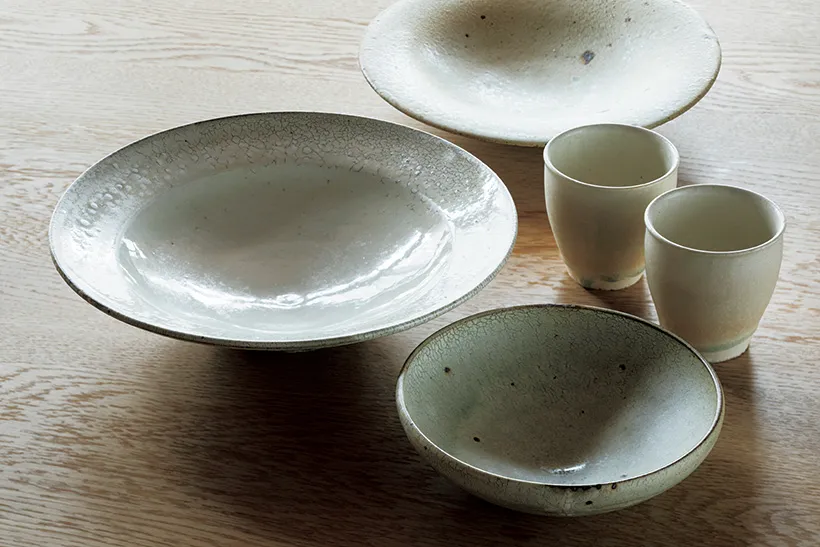
If you appreciate the beauty of Japanese ceramics, may we introduce you to the world of utsuwa? The Japanese word for vessels, utsuwa, encompasses pieces used for servingfood, tea, and flowers, bringing artistry into everyday life. Shaped by centuries of craftsmanship, Japan’s ceramic traditions continue to evolve through the artists who carry them forward. Here, we introduce four ceramic artists whose distinctive techniques and ideas bring fresh perspectives to this enduring craft.
Shinbe Sakakura brings a sculptor’s sensibility to his family’s nearly 370-year tradition of Fukawa Hagi pottery. Originating in Yamaguchi Prefecture, Hagi ware is a traditional style of Japanese pottery closely associated with tea culture. A graduate of Tokyo University of the Arts, Sakakura became the 16th-generation head of the family workshop in 2024.
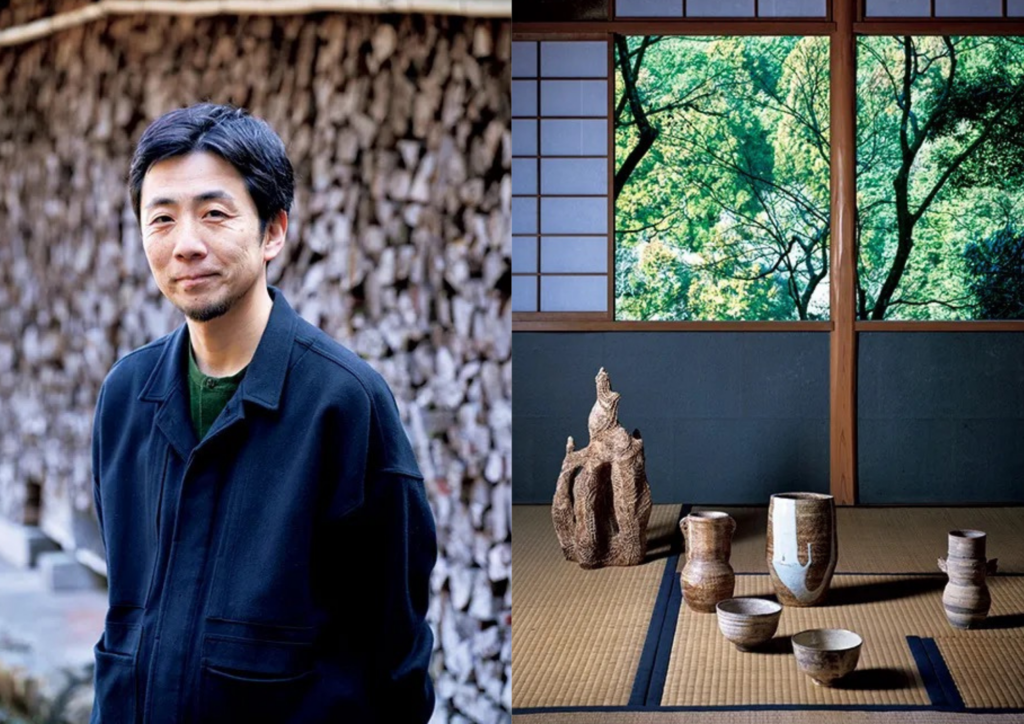 Left: Shinbe Sakakura. Right: At Ginshōtei, the tea house on the mountainside behind his workshop.
Alongside traditional tea ceremony ceramics, he creates sculptural objects and flower vessels that combine Hagi ware techniques with his own artistic expression. “I want to make things that convey the character of this place, including its environment and history,” he says. To bring this vision to life, he incorporates clay that he personally digs from the surrounding mountains, allowing the region’s natural materials to become part of each creation.
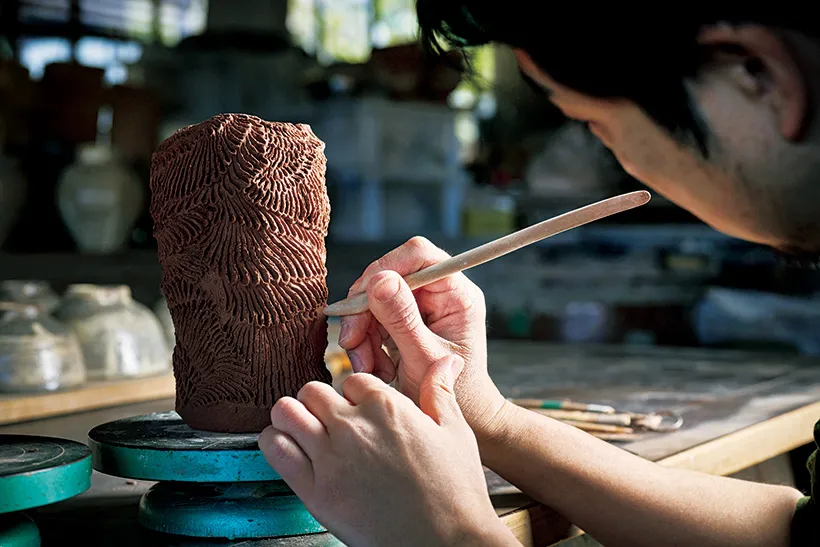
Before firing, Sakakura carves patterns into a flower vessel, one line at a time. Rather than following a particular motif, he moves his wooden spatula wherever his instincts lead him.
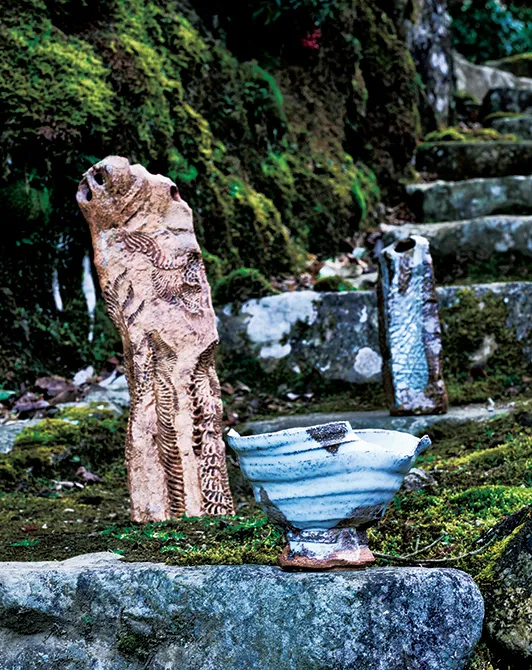
From the foreground:
・“Bowl” (16 cm wide × 18.5 cm deep × 13 cm high), ¥385,000
・“Vessel with Raised-Dot Pattern” (14 cm wide × 11 cm deep × 45 cm high), ¥187,000
・“Flower Vessel with Flowing White Glaze” (13 cm wide × 10 cm deep × 28.5 cm high), ¥202,000.
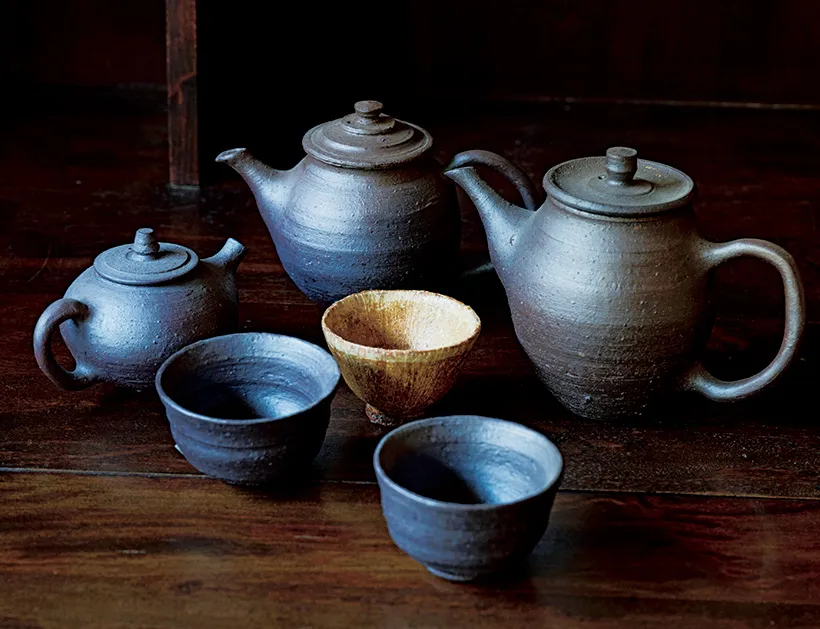 Chinese tea vessels made with clay excavated from the surrounding mountains.
PC: Hiroshi Abe
“At its heart, a tea bowl is a tool through which host and guest connect. Perhaps it can become a bridge connecting people’s hearts around the world.”
For Ryotaro Kato, this belief lies at the heart of his practice. Drawing on the traditions and pioneering spirit of Momoyama-period Mino ceramics, he creates tea bowls that reflect a contemporary sensibility.
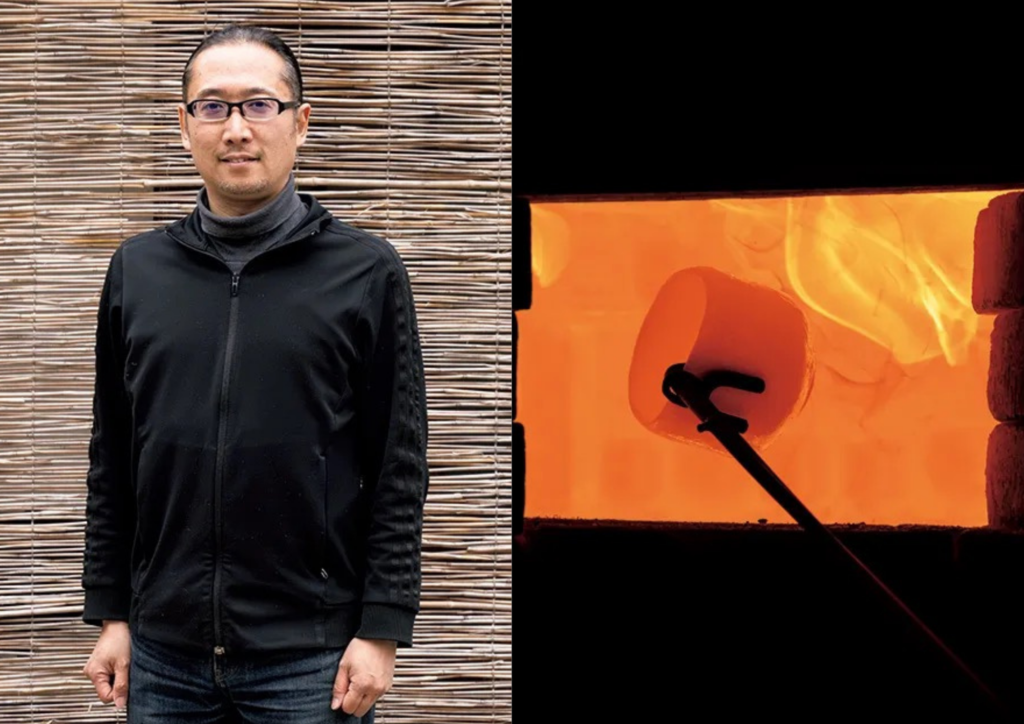 Left: Ryotaro Kato. Right: A tea bowl is removed from the kiln after two days of continuous firing. Taking it out just as the glaze melts and allowing it to solidify produces the lustrous, jet-black finish known as hikidashiguro.
“I want to create new forms of expression by bringing together the many different elements within me.” This approach extends beyond tea bowls to works combining calligraphy and ceramics, as well as collaborations incorporating other materials.
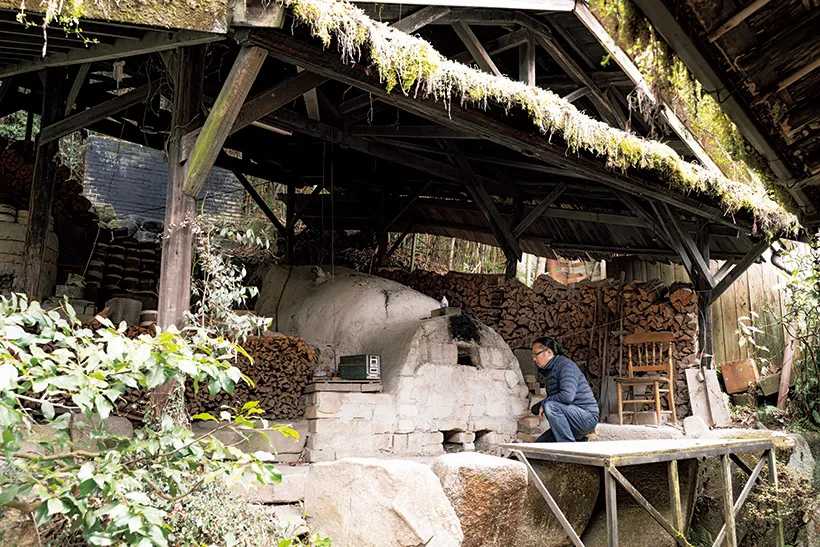
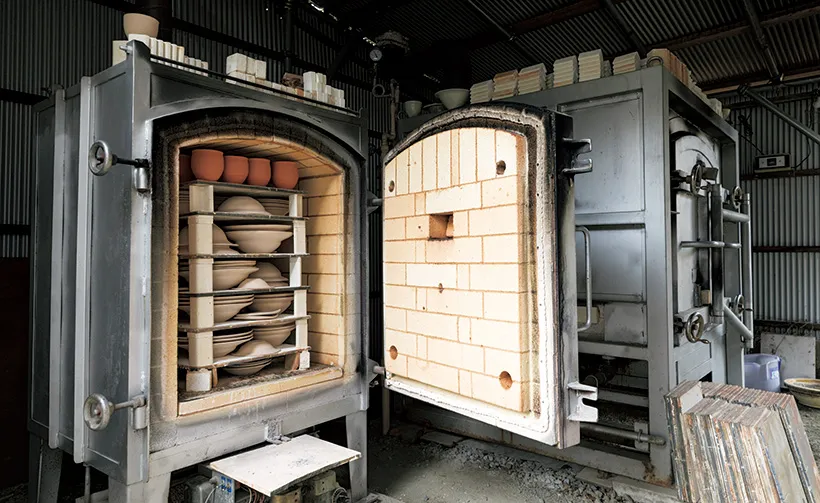
His openness to discovery is also evident in his approach to firing, which he sees as a collaboration between human skill and the natural power of flame. As preparations are completed, ritual handclaps ring through the kiln area. Kato faces the kiln with his palms together in a gesture of sincere prayer.
“My work is my own until the pieces are loaded into the kiln. Beyond that, I entrust them to the deity of fire. As we continually feed the kiln with red pine firewood, the temperature reaches 1,300°C—a world in which all kinds of dramas unfold. Only pieces that make it through possess a certain strength and beauty.”
Each firing leaves room for the unexpected, as Kato’s craftsmanship meets the unpredictable nature of fire.
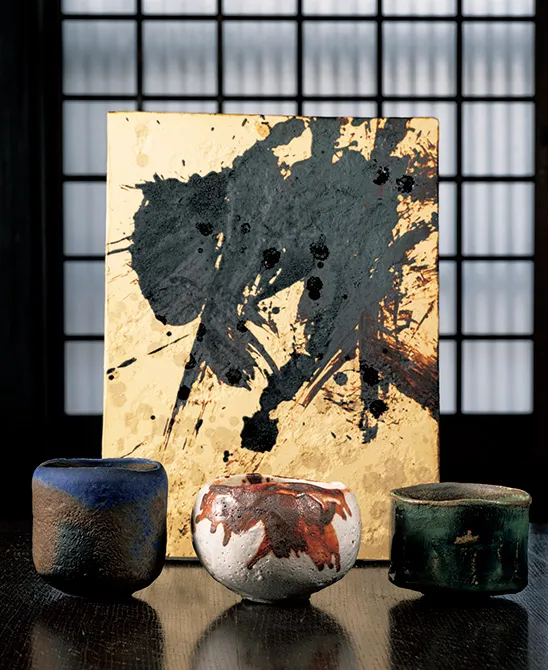
From right:
・“Oribe Tea Bowl,” with turquoise blue emerging against deep green (11.7 cm in diameter × 8.7 cm high), ¥220,000;
・“Shino Tea Bowl,” decorated with iron pigment during the kiln-loading process (13.7 cm in diameter × 10 cm high), ¥275,000
・“Ruri Black Tea Bowl,” whose captivating kiln effects evoke the myriad forms of the natural world (11.1 cm in diameter × 10.8 cm high), ¥220,000. Behind them is “Ren,” a work of calligraphy on a ceramic panel (41.3 cm high × 31 cm wide), ¥220,000.
PC: Shogo Oizumi
Born into a family of potters in Bizen, one of Japan’s Six Ancient Kilns, Kazuya Ishida studied ceramic techniques in Kyoto before apprenticing under Jun Isezaki, a Living National Treasure recognized for his mastery of Bizen ware. After establishing a foundation in traditional techniques, Ishhida moved to the United Kingdom, where he worked in a pottery studio, learned local methods, and immersed himself in a different culture.
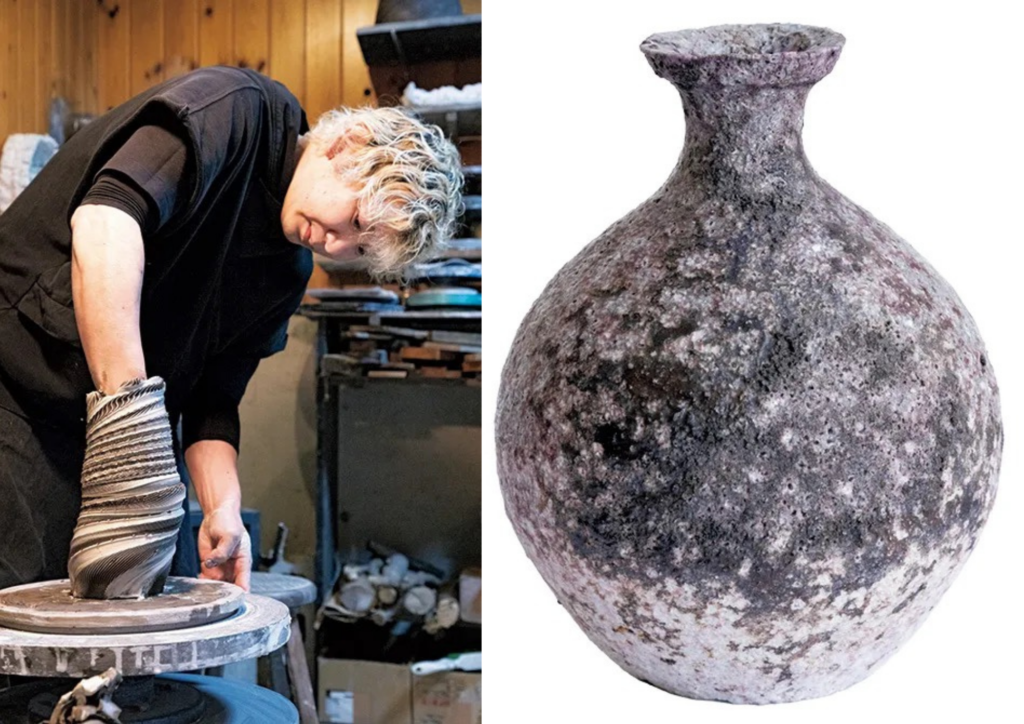 Left: Kazuya Ishida. Right: “Bizen Porcelain Sake Flask,” a surface reminiscent of an antique recovered from the depths of the sea. (10.5 cm wide × 13 cm high), ¥55,000.
Drawing on his training in Japan and experiences abroad, Ishida explores new materials and techniques that expand the possibilities of Bizen ware.
“I’m drawn to natural forms such as shells, geological strata, and rocks. I aim for shapes and textures that extend beyond my control.”
His award-winning work at the 11th Kikuchi Biennale was created using pottery stone he personally extracted from a mine 150 meters underground in Bizen, then fired in a local climbing kiln. The material is so coarse that it can barely be thrown on a potter’s wheel. Its natural impurities give the finished pieces a character distinct from smooth porcelain. He calls this work “Bizen porcelain.”
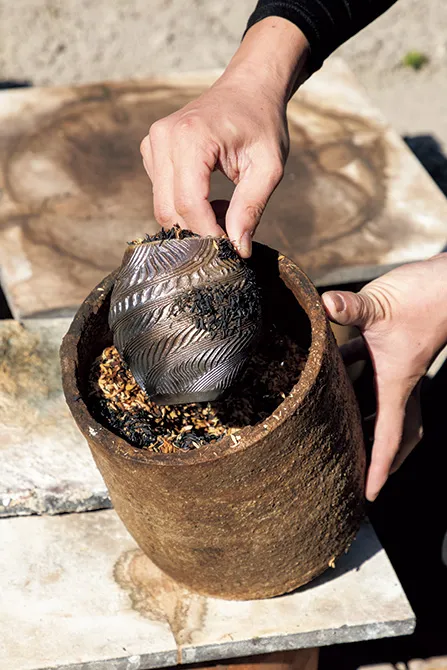
A Rahō teacup is unearthed from rice husks inside a protective firing container, known as a saggar, just after being unloaded from the kiln. The finished surface is black with a metallic sheen.
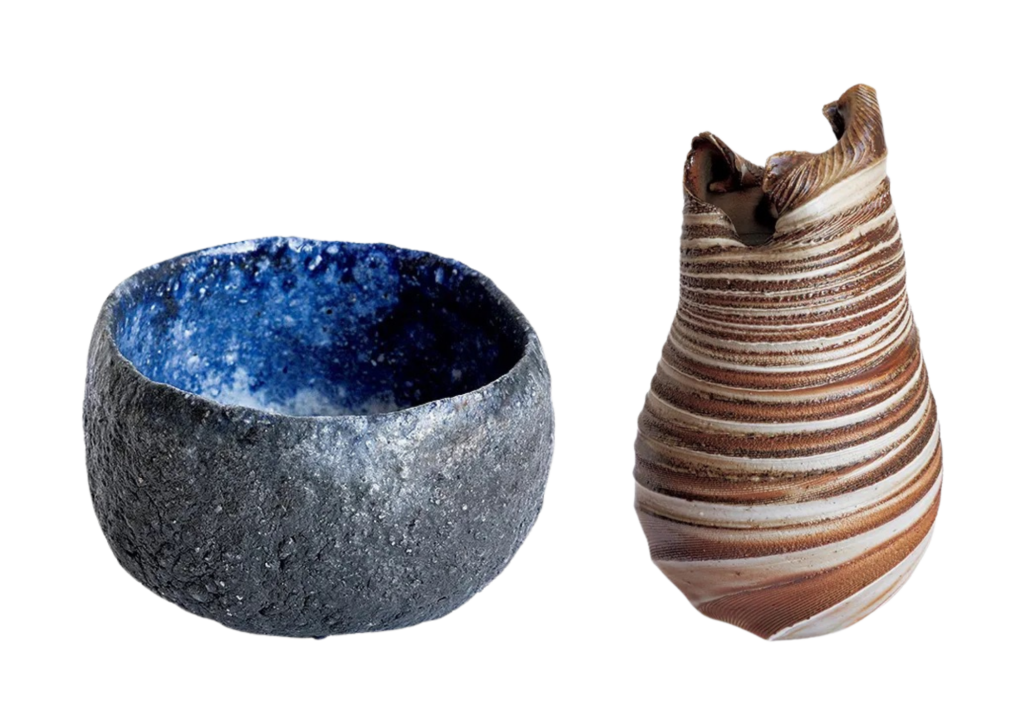
Left: “Abyss Tea Bowl” (13 cm in diameter × 9 cm high), ¥110,000.
Right: “Rahō Vessel,” a flower vessel with beautiful spiral patterns. Its deliberately broken rim adds to its character. (15 cm wide × 25.5 cm high), ¥77,000.
Today, he regularly hosts interns from overseas who discovered his work through social media and other channels. Through these exchanges, his studio has become a meeting place for Bizen’s ceramic traditions and perspectives from around the world.
PC: Hoshito Omija
Tap, tap, tap… As Atsushi Shimomura rhythmically kicks the potter’s wheel, the clay in his hands stretches and transforms into a vessel. His movements are fluid and precise, as though his body and the wheel have become one. The lightness of his movements echoes the character of his work, reflecting his mastery of the craft.
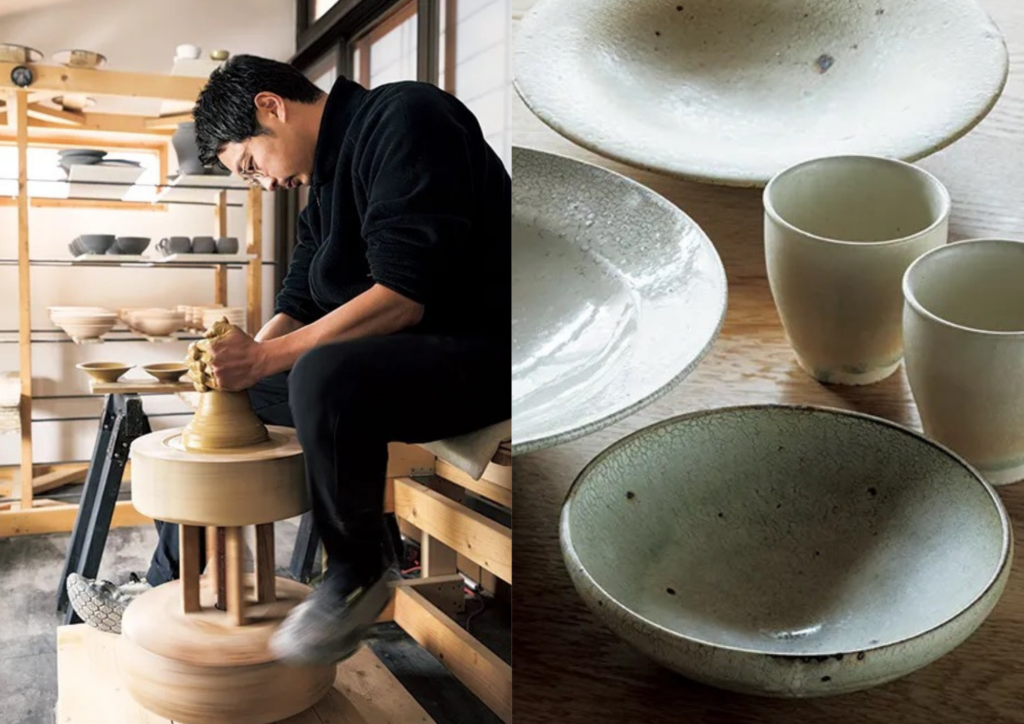 Left: Atsushi Shimomura. Right: His ceramic works (more details below).
“It’s thanks to the thorough training I received in Karatsu. When I’m throwing on the wheel, my mind becomes clear. There’s a very quiet sense of time passing within me,” says Shimomura.
Shimomura brings a contemporary sensibility to kohiki, a traditional pottery technique in which clay is coated with white slip before glazing and firing. His distinctly modern forms are complemented by subtle textures and surface qualities, achieved by adjusting the pressure inside the kiln and controlling how the pieces cool.
His pieces harmonize beautifully with contemporary table settings and have attracted attention overseas. He also supplies his work to Merci, the concept store in Paris’s Marais district.
Clockwise from the foreground:
・“Small Kohiki Teppatsu Bowl” (15.5 cm in diameter × 5 cm high), ¥4,400
・“Kohiki Rimmed Plate, 8-sun” (24 cm in diameter × 6 cm high), ¥8,800
・“Kohiki Rounded Plate, 7-sun” (22.5 cm in diameter × 4 cm high), ¥7,700
・“White Clay Cups” (7 cm in diameter × 7.3 cm high), ¥3,850 each.
“I want to make vessels that feel soft and light, that transcend language and culture. If people in Paris see them as something they want to use today, rather than simply as traditional Japanese pottery, that would make me truly happy.”
PC: Kazuhiko Suzuki
Through locally sourced clay, experiments with fire, and forms inspired by nature, these four artists reveal the possibilities held within a vessel. Their work invites us to look more closely at the objects we use each day, noticing the textures, unexpected details, and human touch that make each piece unique.
Perhaps your next encounter with Japanese ceramics will bring a new appreciation for the bowl, cup, or vase you choose to take home.
Many crafts in Japan are recognized as tangible cu ...
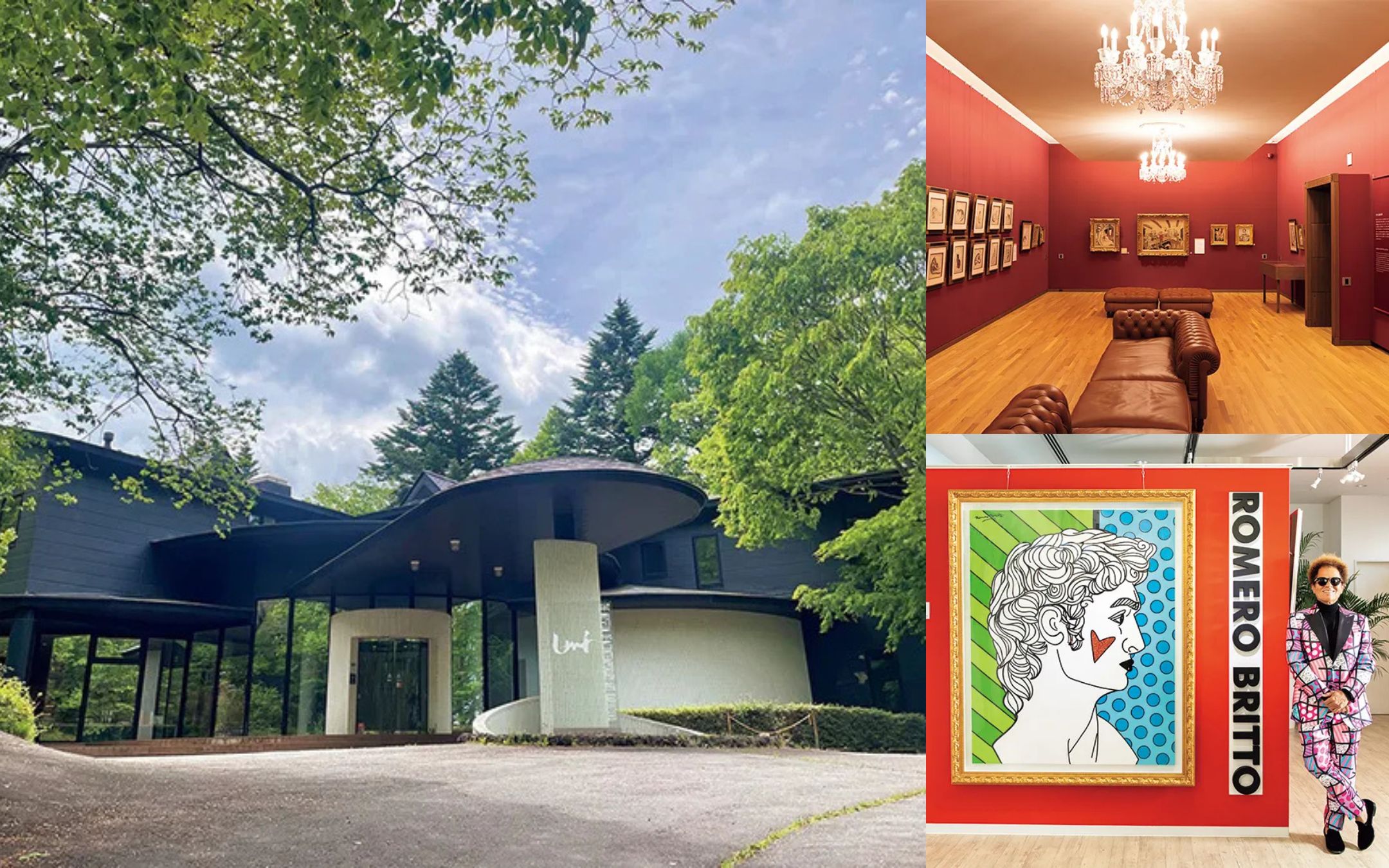
Karuizawa has long been Japan's most prestigious s ...
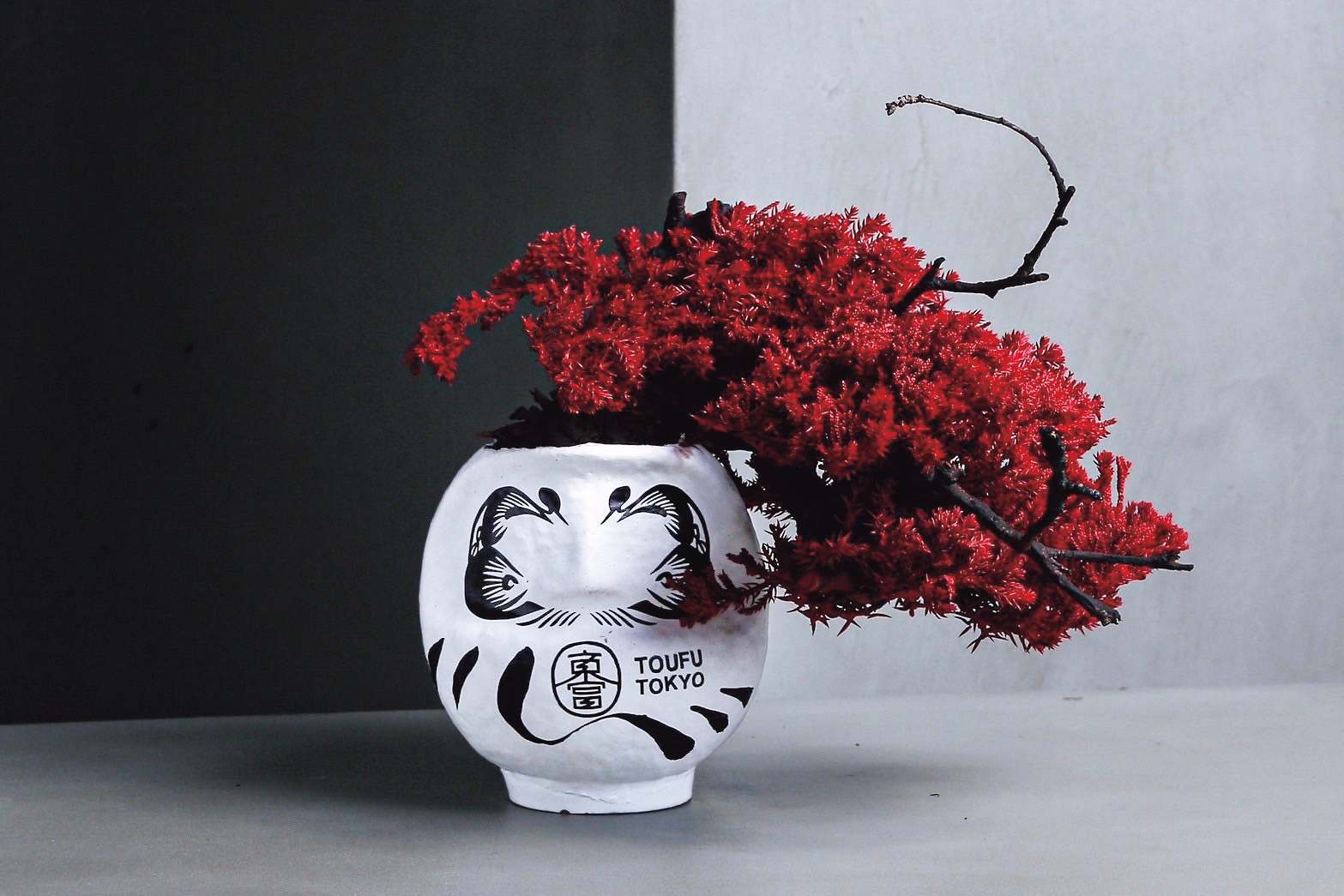
From bonsai, an art form which has existed for ove ...